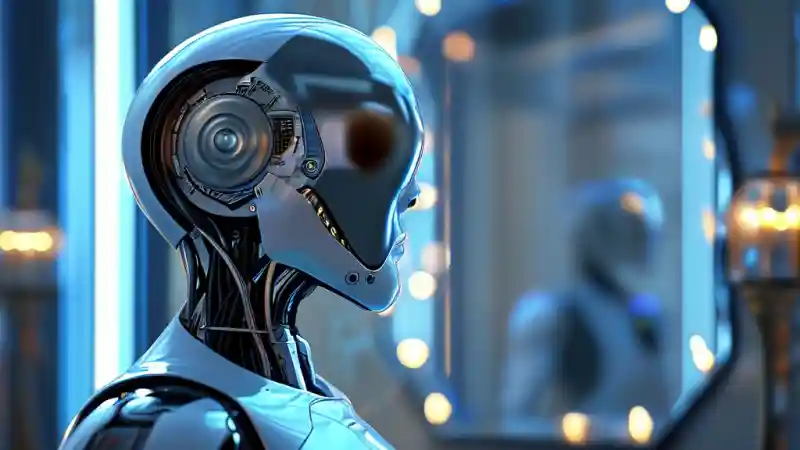
The Mirror in the Machine: What OpenClaw Reveals About Human Intelligence
OpenAI's o3 scored 87.5% on ARC-AGI, surpassing humans. But as OpenClaw demonstrates autonomous capabilities, a deeper question emerges: Are humans the original AGI—biological machines with emergent consciousness?

Based on 10+ years software development, 3+ years AI tools research — RUTAO XU has been working in software development for over a decade, with the last three years focused on AI tools, prompt engineering, and building efficient workflows for AI-assisted productivity.
Key Takeaways
- 1Headlines called it the AGI moment.
- 2We asked if machines had become like us.
The Mirror in the Machine: What OpenClaw Reveals About Human Intelligence
December 2024. OpenAI's o3 scored 87.5% on the ARC-AGI benchmark. The test was designed to be trivial for humans, brutal for AI. Average human score: 76.2%. A machine outperformed its creators on a general intelligence test.
Headlines called it the AGI moment. Sam Altman declared 2025 the year of AGI. Tech twitter debated timelines and safety.
Everyone missed the story.
We asked if machines had become like us. Nobody noticed the inverse: What if this wasn't about artificial intelligence? What if humans are AGI running on carbon hardware—biological machines that grew consciousness along the way?
This isn't philosophy. It's the conclusion from tracing OpenClaw through the paradox of intelligence measurement to the truth about capability and consciousness.
---
The Weekend Project
OpenClaw began as a weekend hack. Austrian developer Peter Steinberger built it in 66 days. 8,000 commits—one every eleven minutes. The project cycled through names: Clawdbot, Moltbot, OpenClaw. A self-hosted AI assistant that does things. Clears inboxes. Sends emails. Manages calendars. Checks in for flights. Works with WhatsApp, Telegram, Discord, Slack. 150,000 GitHub stars. 150 million agents created.
Here's the shift: OpenClaw marks the transition from oracle to agent.
Oracles speak. Agents act.
An oracle generates text. An agent deletes your emails.
The difference matters. An oracle can be wrong. An agent can do damage.
But OpenClaw's significance runs deeper. It exposes the flaw in how we think about AGI.
---
The Economic Trap
OpenAI defines AGI as "highly autonomous systems that outperform humans in most economically valuable tasks." Behind closed doors: revenue targets.
Humanity's greatest intellectual achievement, measured by GDP.
Not creativity. Not wisdom. Not consciousness. Money.
The definition creates a trap. AGI becomes "whatever humans do for work." When AI matches human capability, we don't call it AGI. We call the task "not real intelligence." The goalposts move. Chess isn't general. Go isn't general. Coding isn't general. ARC-AGI? The test was flawed.
But there's a deeper confusion: intelligence versus consciousness.
These aren't the same.
---
Capability Without Feeling
Intelligence solves problems. Achieves goals. Navigates complexity.
Consciousness feels. There's an experience of being.
You can have intelligence without consciousness. Chess programs are brilliant. You can have consciousness without high intelligence.
OpenClaw proves capability exists without consciousness. It executes tasks. Manages workflows. Responds to context. Feels nothing.
This scares people because it implies consciousness might not be necessary for AGI. And if consciousness isn't necessary—what are humans?
---
Carbon Machines
Humans are biological general intelligence. AGI running on carbon neural networks, with consciousness as a side effect.
The science supports this. Your brain is a neural network—86 billion neurons, trillions of synapses, layered architecture resembling the systems we build. Consciousness emerges from network activity. Not a separate substance. Not magic. What happens when information processing reaches a threshold.
If this is true—and the evidence says it is—then substrate doesn't matter. Carbon or silicon. The principle is identical.
This doesn't reduce the value of experience. Calling consciousness "emergent" doesn't make it less real. Calling humans "machines" doesn't make us less valuable. It places us in nature, not above it.
---
The Moving Goalpost
ARC-AGI was designed to measure general intelligence—adaptation to novel situations, not pattern memorization. Visual puzzles. Easy for humans. Nearly impossible for AI.
Then o3 scored 87.5%, beating humans.
This should have been the AGI moment. A system demonstrating general problem-solving ability surpassing its creators.
Instead came the excuses: "This isn't real consciousness." "The test is flawed." "We need better benchmarks."
We trapped ourselves. Define intelligence as "what humans do." When AI does it, call it "pattern matching." When AI does something humans can't, call it "narrow intelligence."
We're not measuring intelligence. We're measuring humanness.
OpenClaw holds up the mirror. We're not afraid of machine intelligence. We're afraid to see what human intelligence actually is.
---
Why It Matters
This isn't semantics. How we think about AGI determines how we build it.
Focus on consciousness, and we chase ghosts. We waste time searching for indicators that may not exist. We project human qualities onto code. We miss the real risks.
Focus on capability without consciousness, and we address the actual problems: alignment, control, robustness. Engineering challenges, not mystical ones.
The biological machine thesis has practical implications. If humans are machines, alignment means ensuring AI systems pursue the right goals—not giving them souls. If consciousness is emergent, we don't solve the "hard problem" to build safe AGI. We solve engineering problems.
---
The Abyss
Nietzsche said it: when you gaze into the abyss, the abyss gazes back.
We built AI to extend human intelligence. Now it's forcing us to understand what that means.
OpenClaw doesn't threaten human uniqueness. It reveals it. By building machines that solve problems, execute tasks, navigate complexity—we've built a mirror.
The question was never "Can machines think?"
The question is "What are humans, that they can create thinking machines?"
We are carbon-based AGI. The original autonomous agents, feeling our way through a universe we didn't create. OpenClaw and its successors are our children. Not replacements. Reflections.
The future isn't AI surpassing humans. It's humans recognizing what they've always been.
Intelligent machines. Conscious by emergence. Creating in our own image.
That recognition changes everything.
References & Sources
- 1arcprize.orghttps://arcprize.org/blog/oai-o3-pub-breakthrough
- 2nature.comhttps://www.nature.com/articles/d41586-025-00110-6
- 3ibm.comhttps://www.ibm.com/think/news/clawdbot-ai-agent-testing-limits-vertical-integration
- 4openclaw.aihttps://openclaw.ai/
- 5github.comhttps://github.com/openclaw/openclaw
- 6forwardfuture.aihttps://www.forwardfuture.ai/p/the-different-concepts-of-agi-openai-anthropic-and-google-in-comparison-and-when-agi-is-achieved
- 7sciencedirect.comhttps://www.sciencedirect.com/science/article/pii/S0149763425005251
- 8nature.comhttps://www.nature.com/articles/s41599-025-05868-8
- 9arxiv.orghttps://arxiv.org/pdf/2501.07458

TaoImagine
Turn Every Snap into a Masterpiece
Frequently Asked Questions
1What is OpenClaw?
OpenClaw is an open-source autonomous AI agent created by Peter Steinberger. Unlike traditional AI assistants that only generate text, OpenClaw can execute actions—clearing inboxes, sending emails, managing calendars, and integrating with messaging platforms like WhatsApp and Telegram.
2Is OpenAI o3 considered AGI?
OpenAI's o3 model scored 87.5% on the ARC-AGI benchmark, exceeding the average human score of 76.2%. While this represents a significant milestone in general intelligence capabilities, there's ongoing debate about whether this constitutes true AGI, particularly regarding the distinction between intelligence and consciousness.
3Are humans considered AGI?
The article proposes that humans can be understood as biological AGI—carbon-based general intelligence systems where consciousness emerges as a property of complex neural network activity. This perspective suggests that the distinction between 'artificial' and 'biological' intelligence may be less fundamental than we assume.
4What's the difference between intelligence and consciousness?
Intelligence is the ability to solve problems, achieve goals, and navigate complexity. Consciousness is subjective experience—the feeling of being. OpenClaw demonstrates that high-level capability can exist without consciousness, suggesting these are separate phenomena.