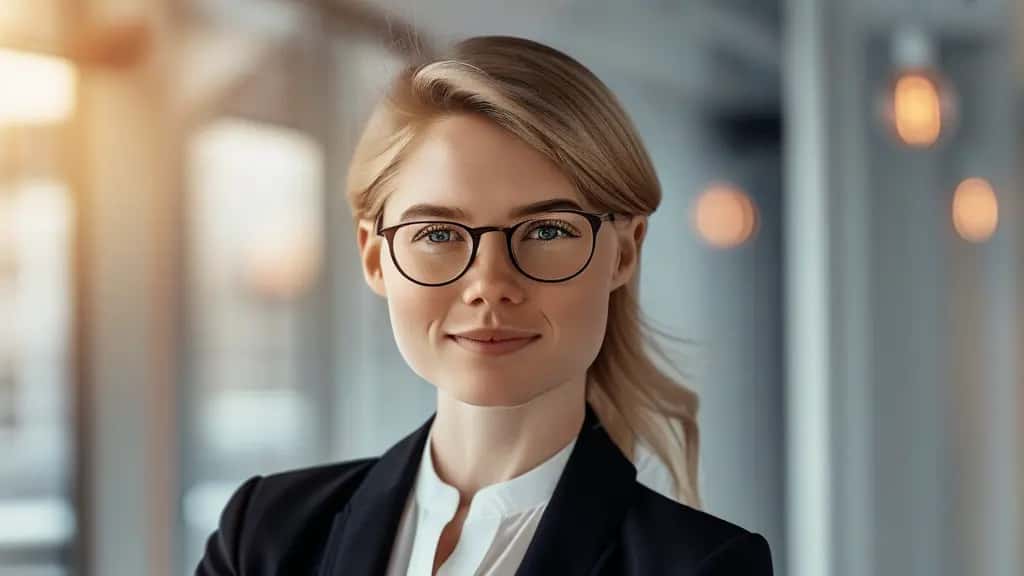
AI-Generated LinkedIn Headshots: The Guide to Nordic Minimalist Professionalism
Discover how Nordic minimalist AI headshots deliver 14x more LinkedIn profile views. Compare traditional studio photography with modern AI generation, privacy compliance, and best practices.
AI-Generated LinkedIn Headshots: The Guide to Nordic Minimalist Professionalism
Discover how Nordic minimalist AI headshots deliver 14x more LinkedIn profile views. Compare traditional studio photography with modern AI generation, privacy compliance, and best practices. According to findings from the Microsoft and LinkedIn Work Trend Index, over 75% of global knowledge workers now actively integrate generative AI tools into their everyday workflows [1]. Booking a studio session, traveling across town, paying hundreds of euros, and coordinating appointments feels disproportionately burdensome during a busy work week. At the same time, executive recruitment and professional networking have shifted decisively online, where first impressions form in fractions of a second across a digital screen.
Based on 10+ years software development, 3+ years AI tools research — Rutao Xu has been working in software development for over a decade, with the last three years focused on AI tools, prompt engineering, and building efficient workflows for AI-assisted productivity.
Key Takeaways
- 1This dilemma is shared by thousands of modern specialists, founders, and career seekers.
- 2According to findings from the Microsoft and LinkedIn Work Trend Index, over 75% of global knowledge workers now actively integrate generative AI tools into their everyday workflows [1].
- 3Booking a studio session, traveling across town, paying hundreds of euros, and coordinating appointments feels disproportionately burdensome during a busy work week.
AI-Generated LinkedIn
Headshots: The Guide to Nordic Minimalist Professionalism Imagine a common scenario for an experienced professional: you review your resume or LinkedIn profile and realize your headshot is five years out of date.
Booking a studio session, traveling across town, paying hundreds of euros, and coordinating appointments feels disproportionately burdensome during a busy work week.
At the same time, executive recruitment and professional networking have shifted decisively online, where first impressions form in fractions of a second across a digital screen.
In forward-looking economies such as Finland and the broader Nordic tech ecosystem—where digital adoption is among the highest in Europe [2] [3]—professionals continuously seek ways to optimize their workflows without compromising on authenticity or quality.
This dilemma is shared by thousands of modern specialists, founders, and career seekers. Traditional commercial photography studios are no longer the only way to communicate trustworthiness, competence, and leadership.
Generative AI portrait platforms like TaoImagine have emerged as a high-performance alternative, seamlessly uniting Nordic minimalist aesthetics with advanced diffusion modeling.
In workplace cultures where remote collaboration and asynchronous presence have become standard practice [2], adopting pragmatic technological solutions for personal branding represents a natural and logical evolution. ---
The Digital First Impression:
Why Visual Quality Drives Career Trajectory On LinkedIn and professional networks, your profile picture serves as your primary executive business card. It speaks on your behalf before a recruiter, client, or partner reads a single line of your experience.
A high-quality portrait is an active asset within your personal brand that directly impacts networking conversion rates and inbound career inquiries.
During talent acquisition and vendor evaluations, initial visual contact establishes the psychological foundation for trust, signaling attention to detail, diligence, and professional self-respect.
In business environments that value punctuality, modesty, and understated competence [2], subtle visual imperfections—such as blurry phone crops or cluttered vacation backgrounds—can inadvertently tilt decisions toward competing candidates.
An AI-generated professional headshot is an algorithmic portrait constructed using latent diffusion models and neural facial embeddings [6].
The system analyzes the geometry, skin tones, and key facial landmarks from a user’s casual reference photos, reconstructing studio-grade lighting, depth of field, balanced shadows, and tailored attire without requiring a physical photo session [6].
Crucially, this technology does not fabricate an unrecognizable persona; rather, it cleans away environmental noise, uneven ambient lighting, and casual artifacts while preserving the authentic micro-features that make an individual immediately recognizable in real life.
According to data published by leading professional networks, members with a professional profile photo receive up to 14 times more profile views and 9 times more connection requests compared to those with empty or informal avatars.
In an interconnected and highly competitive labor market, visual polish is indispensable. For specialists seeking international remote roles or cross-border consulting engagements, an executive-grade headshot is often the first concrete evidence of global standard alignment and meticulous personal standards. ---
Nordic Professionalism
and the Minimalist Aesthetic: Why Less Is More Modern professional culture—particularly within the Nordic and Northern European business landscape—places exceptional value on authenticity, clarity, and understated elegance.
The primary advantage of specialized tools like TaoImagine over generic consumer image generators is their ability to produce portraits that avoid the synthetic, over-airbrushed look typical of amateur filters.
Instead, they replicate the natural "business casual" aesthetic prized in contemporary executive circles. Key visual elements of this aesthetic include:
- Soft, Diffused Lighting: Mimicking natural northern daylight rather than harsh, artificial studio strobes.
- Architectural and Neutral Backdrops: Clean glass, muted wood textures, soft-focus modern workspaces, or subdued urban exteriors rather than distracting artificial gradients.
- Realistic Skin Textures: Preserving natural skin grain, subtle laugh lines, and true-to-life tone rather than applying artificial plastic smoothing [6].
- Understated Wardrobe Options: Crisp collared shirts, tailored merino wool sweaters, structured blazers, and clean monochromatic palettes that communicate competence without ostentation. This balance is vital. An aggressively retouched or hyper-glamorous photo can trigger skepticism among hiring managers and corporate partners who value directness, transparency, and authenticity. Modern generative diffusion models can capture this exact equilibrium—delivering a refined, studio-grade appearance while maintaining genuine human warmth. ---
Traditional Photography
Studio vs.
Dedicated AI Generation Understanding the functional trade-offs between traditional studio shoots and specialized AI portrait generation helps professionals choose the right tool for their career requirements: | Evaluation Dimension | Traditional Studio Shoot | Generic Mobile Filter | Dedicated AI Platform (TaoImagine) |
|:--- |:--- |:--- |:--- |
| Turnaround Time | 3–7 business days | Instant (< 1 minute) | Under 60 minutes |
| Total Cost | €250 – €600+ | Free / Ad-funded | < €20 – €40 |
| Output Variety | 1–3 retouched frames | 1–2 stylized crops | 50+ diverse variations |
| Logistical Effort | Booking, commute & wardrobe prep | Single selfie upload | 100% self-paced online workflow |
| Style Flexibility | Single fixed studio setup | Preset cartoon masks | Full control over setting, wardrobe & mood |
| Biometric Privacy | Air-gapped / Local storage | High risk / Data reselling | Strict GDPR & EU AI Act compliance [4] [5] |
| Photographic Realism | 10 / 10 | 3–5 / 10 | 8.5–9.5 / 10 | The ability to generate dozens of distinct styles from a single batch of photos provides unmatched versatility.
A modern consultant or technical leader rarely operates on just one channel: LinkedIn may require a conservative blazer and collared shirt; an engineering GitHub profile or technical blog may favor a relaxed crewneck in front of an architectural backdrop; a speaking profile for an industry conference may call for a dynamic, natural-light outdoor shot.
With AI generation, building a comprehensive visual asset library across multiple professional settings requires minutes of compute time rather than thousands of euros in studio bookings. ---
The Workplace Transformation:
AI Adoption Across Enterprise Ecosystems Generative artificial intelligence has transitioned rapidly from experimental curiosity to essential enterprise infrastructure.
According to findings from the Microsoft and LinkedIn Work Trend Index, over 75% of global knowledge workers now actively integrate generative AI tools into their everyday workflows [1].
This cultural and technological shift extends directly into personal brand governance: utilizing generative AI to craft a polished executive portrait is a natural continuation of modern digital fluency. Macroeconomic data highlights the velocity of this transition.
Independent market research indicates that the global market for synthetic visual assets and AI avatars is expanding at a compound annual growth rate (CAGR) of 35.2%, with the enterprise generative visual software sector exceeding $600 million [1] [6].
In technologically advanced economies, high digital intensity is widely recognized as a national strength [3].
According to official data from Statistics Finland, over three-quarters of technology and professional services companies utilize advanced digital and AI systems within their core operations [2].
In this environment, leveraging automated tools to manage visual assets is viewed as a hallmark of operational efficiency, technological maturity, and rapid adaptability.
By deploying tools like TaoImagine, professionals can refresh their visual branding instantly whenever their career role evolves, without expending disproportionate time or budget.
This efficiency allows specialists to allocate their time where it matters most: delivering high-impact work, building strategic partnerships, and advancing organizational goals. ---
5-Step Blueprint: How
to Generate Flawless Professional AI Headshots To achieve photorealistic, executive-grade AI headshots that seamlessly align with modern professional standards, follow this structured five-step method:
1. Curate a Diverse, High-Resolution Training Dataset
Upload 10 to 20 varied reference photos captured from multiple angles and under differing natural lighting conditions. High-variance training data enables the diffusion model to reconstruct your bone structure, eye shape, and facial contours with maximum precision [6].
2. Avoid Occlusions, Distortions, and Group Photos
Ensure your source photos feature only yourself. Avoid images where sunglasses, wide-brim hats, heavy headphones, or harsh shadows obstruct the eyes and jawline. Clear facial visibility is critical for accurate neural feature mapping.
3. Select a Cohesive, Context-Appropriate Aesthetic
Choose lighting and backdrops aligned with your professional industry. Soft directional natural light, subtle modern office interiors, or blurred architectural outdoor backdrops create an open, approachable, and authoritative tone suitable for executive roles.
4. Align Wardrobe with Your Career Domain
Tailor your virtual wardrobe to the conventions of your target sector. For software engineering, product management, and creative leadership, clean crewnecks, merino knitwear, or casual unbuttoned collars project modern competence.
For legal, financial, or corporate advisory roles, structured blazers and tailored suits offer timeless authority.
5. Refresh Visual Assets Regularly
An executive headshot must accurately reflect your current in-person appearance during video conferences and client meetings.
If you update your hairstyle, change your eyewear, or grow facial hair, generating an updated portrait set takes only minutes, ensuring your professional presence remains honest and trustworthy. ---
Related Reading
- TaoImagine
- AI Portrait Privacy & Ethics: Who Owns Your Face?
- AI Portraits for Creative Professionals: When and How to Use Synthetic Imagery ---
References [1] Microsoft and LinkedIn Annual Work Trend Index https://www.microsoft.com/en-us/worklab/work-trend-index
[2] Statistics Finland Enterprise Digitalization and Technology Adoption Survey https://stat.fi/en
[3] European Commission Digital Economy and Society Index https://digital-strategy.ec.europa.eu/en/policies/desi
[4] European Union Artificial Intelligence Act Regulatory Framework https://artificialintelligenceact.eu
[5] General Data Protection Regulation Official Legal Text and Guidance https://gdpr-info.eu
[6] Stanford Institute for Human-Centered Artificial Intelligence Generative Media Research https://hai.stanford.edu
TaoImagine
Turn Every Snap into a Masterpiece
Related Reading
Frequently Asked Questions
1How does an AI-generated headshot differ from a traditional studio portrait?
An AI headshot is generated from multiple reference photos using advanced latent diffusion models. Instead of staging a physical photo shoot, the algorithm models your unique facial structure and synthesizes studio-grade lighting, balanced depth of field, and professional wardrobe while preserving your authentic facial features.
2Are AI-generated headshots acceptable for LinkedIn and executive resumes?
Yes. When generated with natural lighting, accurate facial proportions, and minimal artificial smoothing, AI headshots are indistinguishable from professional studio photography. They project authenticity and modern digital competence without the uncanny-valley effects of casual photo filters.
3How do I ensure my AI headshot looks natural and authentic?
To achieve maximum photorealism, upload 10 to 20 varied, high-resolution source photos without sunglasses or heavy filters. Choose understated business casual attire, soft diffused natural light, and clean architectural or neutral backdrops that reflect your professional domain.
4Is my biometric data and facial privacy protected when using TaoImagine?
Yes. TaoImagine adheres to strict European privacy standards, including GDPR Article 9 and the EU Artificial Intelligence Act. Source photos and generated facial embeddings are processed with enterprise-grade data isolation and ephemeral storage guarantees, ensuring your personal biometric vectors are never used to train third-party foundation models.