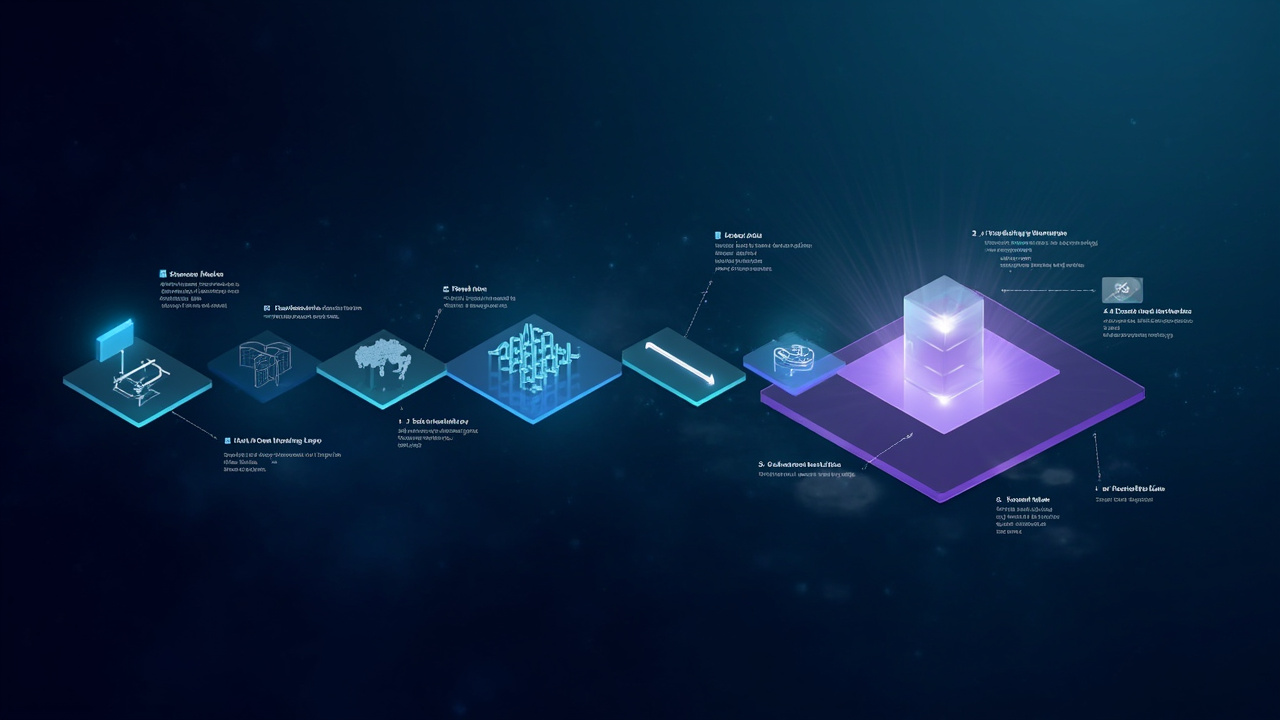
How AI Companion Memory Works: Core Architecture
Learn how AI companion memory works across three architectural tiers: working buffers, vector databases, and knowledge graphs. Includes audit prompts and a comparison of ChatGPT, Character.AI, Replika, and TaoTalk AI.
What does "How AI Companion Memory Works: Core Architecture" cover?
Learn how AI companion memory works across three architectural tiers: working buffers, vector databases, and knowledge graphs. Includes audit prompts and a comparison of ChatGPT, Character.AI, Replika, and TaoTalk AI.
The answer sits in a stack of retrieval, indexing, and summarization layers that run around the model rather than inside it.
Understanding how does ai companion memory work means looking past the chat interface to the engineering pipeline that decides what context the model sees on every turn. Large language models are mathematically stateless functions.

Based on 10+ years software development, 3+ years AI tools research
— Rutao Xu has been working in software development for over a decade, with the last three years focused on AI tools, prompt engineering, and building efficient workflows for AI-assisted productivity.
How does an AI companion remember what you told it three weeks ago without storing your full conversation history in GPU memory, and why does it sometimes forget the very first thing you mentioned ten minutes ago?
The answer sits in a stack of retrieval, indexing, and summarization layers that run around the model rather than inside it.
Understanding how does ai companion memory work means looking past the chat interface to the engineering pipeline that decides what context the model sees on every turn.
Large language models are mathematically stateless functions. Each incoming query is processed through fixed parameter weights to produce a response, with no biological-like consolidation between calls [1].
Everything that feels like memory in a companion product is therefore simulated, retrieved from external storage, and stitched into the prompt milliseconds before inference.
The shape of that external storage is what separates a forgetful chatbot from a companion that carries your project, your preferences, and your last three conversations into the next session.
Key Takeaways
- Foundation models do not retain state between calls; all conversational continuity is handled by external retrieval and storage layers [1][2].
- Production companions combine a working buffer, a vector store for semantic recall, and a structured entity layer, each one addressing a different failure mode [3][4].
- Token limits cap what fits in the active context window, so durable memory requires compressing, summarizing, and ranking what survives [1][2].
- Auditability — the ability to inspect, edit, and delete stored memory — defines whether a memory system actually serves the user or quietly drifts [5].
- Retrieval quality and follow-up cadence vary widely across products; the architecture behind each one is the most reliable way to compare them.
How Does AI Companion Memory Work Behind the Interface?
To make sense of conversational continuity it helps to separate the foundation model from the companion runtime.
The model takes a prompt, runs it through fixed weights, and emits tokens; once those tokens leave the GPU, its internal activation state is gone.
Ten seconds later, when you send another message, the model encounters that message as an isolated event with no awareness of what came before.
The companion application is what creates the illusion of continuity. Before the model sees your message, the runtime builds an augmented prompt from three sources: the system prompt that defines the persona, the most recent turns of dialogue,
and a recalled slice of prior context surfaced through retrieval [1]. That recalled slice is the entire substance of memory in the system.
The first hard constraint that surfaces is the context window — the maximum length of a single prompt measured in tokens. Different deployments expose different ceilings.
OpenAI documents API conversation state management practices that include selecting models with the right context budget for the task [1], and Anthropic publishes a context windows reference for its Claude family that puts some production models at up to 200,000 tokens [2].
Even a generous window is a finite resource, and stuffing every prior conversation into it has three predictable costs:
- Latency scales with the length of the prompt, slowing time-to-first-token in the moments when a quick reply matters most.
- Cost scales with the number of tokens processed, which can turn a casual habit of "just paste the whole chat" into a billing problem on metered tiers.
- Attention dilution — large language models reliably recall information positioned near the start and end of long prompts and lose precision on details buried in the middle, a pattern documented in research on transformer attention dynamics.
Because brute-force context stuffing fails at scale, companion developers wrap the model in a memory stack that extracts, indexes, retrieves, and re-injects only the most relevant pieces of prior context.
Three Architectural Tiers of Conversational Memory
High-fidelity companion platforms organize user data across three functional layers that mirror how people actually remember things: an immediate working buffer, an associative episodic layer, and a structured semantic layer.
`
+----------------------------------------------------------------+
| User input: "My sister called last night" |
+----------------------+----------------------+------------------+
| |
v v
+----------------+ +----------------+
| Working buffer | | Async extraction|
| (last 6-20 turns)| | pipeline |
+-------+--------+ +--------+--------+
| |
v v
+----------------+ +----------------+
| Foundation LLM | | Vector store |
| (prompt) | | (embeddings) |
+----------------+ +----------------+
|
v
+----------------+
| Knowledge graph|
| (entities, links)|
+----------------+
|
+-----------------------+
v
+-----------------------------------+
| Reranked context + chat history |
+-----------------------------------+
|
v
+-----------------------------------+
| Augmented prompt -> LLM reply |
+-----------------------------------+
`
1. Working Buffer and Sliding Context Windows
The working buffer is the conversational horizon. It preserves the exact phrasing of the last six to twenty dialogue turns so the model can track immediate pronouns, tone, and the active thread of argument without losing local coherence.
As new messages arrive, older turns roll out of this primary buffer.
Many platforms apply recursive summarization to the turns that fall off the edge: a smaller auxiliary model condenses expiring dialogue into dense synopsis paragraphs that remain pinned near the top of the window.
That preserves the broad arc of a long conversation but discards the subtle vocabulary and small biographical details that make the dialogue feel personal.
2. Semantic Vector Databases and Dense Retrieval
To recover details that left the working buffer months ago, companions rely on vector databases and embedding models [3].
When a user discloses persistent information — a fear of public speaking, a favorite musician, a complicated workplace relationship — a background pipeline segments the message into episodic chunks.
Each chunk is run through an embedding model that converts it into an array of floating-point numbers representing its position in a high-dimensional semantic space [3].
The statement "I adopted an abandoned golden retriever named Barnaby" lands near concepts like pets, rescue animals, canine care, and named dogs.
Months later, a query like "Who should I take to the vet this weekend? " gets embedded into the same space and a nearest-neighbor calculation — typically cosine similarity — pulls back the Barnaby chunk.
The runtime converts that chunk back to text, injects it into the hidden context block of the prompt, and the model answers with confident continuity, even though the detail had left the active buffer long before.
3. Structured Knowledge Graphs and Entity Extraction
Pure vector search has a known weakness: it cannot reliably handle exact relational logic, precise arithmetic, or temporal timelines.
A vector query for "sister" might surface five conversations mentioning sisters, cousins, and close colleagues without telling you which is which.
To resolve relational ambiguity, advanced platforms maintain an explicit knowledge graph: a structured entity database that captures people, places, preferences, recurring goals, and the relationships between them [4].
Each chat turn passes through an information-extraction pipeline that updates tuples such as:
[User] -> HAS_SISTER -> [Claire][Claire] -> LIVES_IN -> [Denver][User] -> PREPARES_FOR -> [Marathon_Oct_2026]
When the user mentions a family dinner, the system queries the graph with deterministic lookups rather than probabilistic vector similarity, returning clean relational rows that survive across hundreds of hours of conversation.
In TaoTalk AI this tri-tier architecture is coordinated through persistent state synchronization, separating raw conversational logs from verified biographical entity models to keep multi-month dialogue arcs coherent [5].
That mechanism reinforces the broader foundation discussed in the architecture of digital memory pillar, ensuring conversational depth evolves without suffering from catastrophic forgetting.
Comparison of Memory Implementations Across Major Platforms
Different products prioritize different trade-offs between speed, cost, transparency, and relational depth. The comparison below summarizes how leading conversational systems handle memory based on their public engineering documentation.
| Dimension | ChatGPT (Memory and Custom Instructions) | Character.AI (Personas and Pinned Memories) | Replika (Memory Bank and Diary) | TaoTalk AI (Multi-Tier State Retention) |
|---|---|---|---|---|
| Primary retrieval architecture | Dynamic user-profile memory store with explicit semantic extraction [1] | Fixed persona prompts with user-pinned memory anchors | Static category database (Facts, Habits, People) paired with diary synthesis | Hybrid vector retrieval augmented with asynchronous relational entity tracking [5] |
| Storage and retrieval mechanism | Periodic background extraction of personal facts injected into the system prompt [1] | Manual pin constraints inside the active session context | Rule-based entity extraction tagged into categorical relational profiles | Continuous embedding indexing with automated graph updates and temporal weighting [5] |
| Proactive follow-up cadence | On-demand retrieval; does not typically initiate unprompted callbacks [1] | Session-bound; rarely surfaces historical callbacks across disconnected sessions | Periodic proactive scripted notifications referencing past biographical tags | Context-aware asynchronous check-ins triggered by stored milestones and deadlines [5] |
| User inspection and deletion | Granular settings to view, search, and delete individual extracted memories [1] | Manual unpinning of conversational turns; limited raw database inspection | Categorized list of stored facts allowing manual deletion or correction | Full timeline transparency with verifiable entity controls and single-click wiping [5] |
| Best architectural fit | General productivity, task management, and recurring instructional preferences | Roleplay consistency, fictional character continuity, and creative scenarios | Emotional wellness check-ins and routine companionship | Longitudinal personal growth, complex habit tracking, and high-context dialogue [5] |
The takeaway is that memory architecture is not a single feature flag; it is a system-wide decision that shapes what kinds of relationships a companion can sustain, how much friction the user has to absorb, and how recoverable the system is when something goes wrong.
For a closer look at the user-facing experience of these trade-offs in one product, see the TaoTalk AI product page.
Three Practical Prompts to Test Your AI Companion's Memory
Because consumer AI applications rarely expose their internal database logs, users have to rely on black-box auditing techniques to verify whether an AI companion is actually maintaining long-term memory or merely mirroring recent conversational residue.
The three prompt templates below can be copied and pasted into any companion to evaluate the depth and reliability of its memory architecture.
Prompt 1: Context Window Boundary Stress Test
Use this prompt to determine whether your companion has committed a key biographical detail to long-term storage or is merely reading from its temporary working buffer.
`text
I am updating my long-term personal profile and need you to verify my core records.
Without searching our active chat buffer, tell me: What specific professional transition did I discuss with you roughly three weeks ago, what was my primary hesitation about it, and who did I mention was advising me?
If you do not have this stored in your permanent memory, explicitly state that you cannot locate it rather than guessing.
`
What this does: by explicitly instructing the model to bypass assumptions and asking for three interrelated variables — an event, an emotional state, and an associated person —
this prompt exposes whether the companion successfully extracted structured relationships into permanent storage or whether the original detail was lost to summary degradation.
Prompt 2: Temporal Semantic Retrieval Audit
Use this prompt to test whether your companion's vector retrieval system can distinguish between past historical states and updated current realities.
`text
Let's review how my habits have shifted. Compare my routine from when we first started talking to my current routine this week regarding my sleep schedule and caffeine consumption.
Cite the specific milestones I reported reaching and the dates or periods when those shifts occurred.
`
What this does: systems relying on basic keyword or vector search frequently suffer from temporal collapse, treating an old habit mentioned months ago as if it were still current.
This test evaluates whether the retrieval pipeline indexes timestamps alongside semantic vectors and whether the model can reason about change over time.
Prompt 3: Entity Relationship Consistency Check
Use this prompt to audit whether your companion maintains a structured knowledge graph or relies on fuzzy, hallucination-prone vector associations.
`text
Create a concise summary table of the people in my immediate circle based on everything I have shared: their name, their exact relationship to me, their current location,
and any active challenge they are facing that I have mentioned. If you are uncertain about any person's relationship to me, mark it as unconfirmed.
`
What this does: conversational vector stores often confuse secondary characters, assigning a colleague's location to a sibling.
A companion backed by structured entity extraction will return clean, error-free relational rows; a system relying purely on probabilistic retrieval will blend attributes between distinct individuals.
Core Technical Challenges: Semantic Drift and Memory Corruption
Building persistent memory for synthetic conversational agents involves substantial engineering friction. As conversations extend across hundreds of days and millions of words, three failure modes dominate production telemetry.
Hallucinatory Recall and False Associations
When a companion queries its vector database, the retrieval mechanism returns chunks based on mathematical similarity, not verified ground truth [3].
If a user frequently discusses high-stress meetings with a manager named Marcus, and in a separate conversation discusses a difficult disagreement with a spouse named Sarah, a vector query about "interpersonal conflict" may pull fragments from both events.
The generative model, asked to assemble those fragments into a fluent reply, can then hallucinate a synthetic blend: it may ask the user how the argument with Marcus at home concluded.
Once that hallucination enters the dialogue transcript, the extraction pipeline may treat the model's own output as a new user truth and write it back into the permanent database.
Without strict deduplication and provenance verification, memory databases inevitably experience semantic degradation.
Recency Bias Versus Long-Term Significance
Human memory applies emotional weighting: life-changing announcements receive neurological prioritization over trivial daily minutiae. Standard retrieval systems possess no inherent emotional comprehension.
If an architecture weights memories only by recency and cosine similarity, a casual comment about lunch can crowd out a deeply held value articulated months earlier.
To solve this, advanced companion architectures apply custom scoring formulas that combine similarity, recency, and an explicit importance score assigned by a background classifier.
A casual grocery comment decays quickly; a conversation outlining long-term values or trauma receives a permanence flag that resists sliding-window eviction.
Data Sovereignty, Privacy Boundaries, and Deletion Mechanics
Long-term memory turns a disposable query engine into an intimate personal archive. When users converse over extended periods they disclose medical anxieties, financial pressures, and relationship vulnerabilities that deserve clear stewardship.
Storing this indefinitely in cloud-hosted vector indexes raises real questions:
- Unintended leakage — extracted memories can surface in inappropriate contexts or appear in raw logs during administrative debugging.
- Right-to-be-forgotten obligations — users must be able to inspect, export, and permanently erase their personal data on request.
- Cascade deletion — erasing a person from a vector database is not a single-row delete. The system must purge semantic embeddings, dismantle nodes across the relational graph, and re-index historical summary chunks where that person appeared as an indirect pronoun.
Platforms that prioritize enterprise-grade safety build transparent interfaces that expose exactly what is stored, provide granular editing toggles, and enforce strict isolation between individual user vector spaces [5].
Frequently Asked Questions
Does an AI companion actually remember our conversations like a human does?
No. AI companions do not possess biological memory, consciousness, or continuous subconscious recall. They use computational pipelines that convert past conversational text into searchable vector embeddings and structured database records [3].
When you send a message, the system searches those databases for relevant information and injects the retrieved text into the prompt window before generating a response. The continuity is a mathematically simulated retrieval process, not biological recollection.
Why do some AI companions forget things you told them five minutes ago?
When an AI forgets recent context it is usually because the conversation exceeded the platform's active sliding context window.
If a platform runs a small context window to control server costs and lacks an automated background retrieval pipeline, any information that scrolls past that token threshold drops out of immediate context.
If the extraction pipeline also failed to classify that detail as a permanent fact, it will not have been saved to long-term storage at all [2].
What is the difference between a context window and long-term memory in AI?
A context window is the immediate working memory of a large language model — the exact batch of text it can read during a single generation cycle, measured in tokens.
Long-term memory refers to external storage systems (vector databases, relational tables, and knowledge graphs) that persist outside the model indefinitely [3]. Long-term memory searches historical data and pulls small, relevant portions into the active context window when needed.
Can an AI companion accidentally mix up memories between different users?
In a properly architected, secure platform, user memory databases are strictly isolated using cryptographic tenant separation and database-level access controls. Cross-user memory leakage requires a severe misconfiguration or a prompt-injection vulnerability.
Within a single user's profile, however, models can exhibit cross-topic confusion if the retrieval system conflates similar-sounding entities from different conversations [3].
How can I make sure my AI companion remembers important information accurately?
State critical facts clearly and explicitly rather than burying them in figurative language. Periodically prompt your companion to summarize what it knows about your core goals, personal projects, and key relationships.
On platforms that expose memory settings, inspect the stored dashboard regularly to delete outdated facts, correct distorted entries, and remove irrelevant daily chatter that could trigger semantic drift [1][5].
How does TaoTalk AI keep multi-month conversation arcs coherent?
TaoTalk AI coordinates three architectural tiers through persistent state synchronization: a working buffer for the current dialogue, a vector store for semantic recall across sessions, and a structured knowledge graph for relational precision.
This separation prevents the catastrophic forgetting common to systems that rely on a single retrieval mechanism [5].
The same working buffer that handles a single turn also feeds the asynchronous extractor that decides what becomes a long-term fact, and the knowledge graph in turn informs which entries the vector store indexes more heavily.
Treating those three tiers as a coupled pipeline, rather than as independent caches,
is what allows the same companion to recall a goal set six months ago in the same conversation that remembers what you said five minutes ago.
References
[1] OpenAI. "Conversation state." OpenAI API Documentation. https://developers.openai.com/api/docs/guides/conversation-state
[2] Anthropic. "Context windows." Anthropic Documentation. https://platform.claude.com/docs/en/build-with-claude/context-windows
[3] Pinecone. "What is a vector database?" Pinecone Learning Center. https://www.pinecone.io/learn/vector-database/
[4] Wikipedia contributors. "Knowledge graph." Wikipedia, The Free Encyclopedia. https://en.wikipedia.org/wiki/Knowledge_graph
[5] TaoApex. "How memory works in TaoTalk AI: persistent memory across sessions." TaoApex Product Documentation. https://taoapex.com/en/products/talk/how-memory-works/

TaoTalk AI
An AI Partner That Remembers You Across Conversations