
Calorie Deficit Explained: Planning, Estimates and Food-Log Limits
How accurate is a photo estimate?
Learn what a calorie deficit is, how to estimate energy needs and review food logs without treating a calculator result as a universal diet prescription.
A calorie deficit means energy intake is below energy expenditure over time.
Weight change is not a fixed conversion from calories to kilograms: metabolism, activity and water balance also change.
A photo estimate is not a measurement of that balance.
Do not use the former bodyweight multiplier on this page: its units were incorrect.
For an adult planning weight management, the NIDDK Body Weight Planner is a starting point, not a diagnosis or prescription.

Key Takeaways
- 1A calorie deficit means energy intake is below energy expenditure over time.
- 2Do not use the former bodyweight multiplier on this page: its units were incorrect.
- 3There is no universal deficit or minimum intake that is safe for everyone.
A calorie deficit means energy intake is below energy expenditure over time.
Weight change is not a fixed conversion from calories to kilograms: metabolism, activity and water balance also change.
A photo estimate is not a measurement of that balance.
What a calorie deficit is
A calorie deficit means energy intake is below energy expenditure over time.
Weight change is not a fixed conversion from calories to kilograms: metabolism, activity and water balance also change.
A photo estimate is not a measurement of that balance.
Step 1 — Review individual needs and planning tools
Do not use the former bodyweight multiplier on this page: its units were incorrect.
For an adult planning weight management, the NIDDK Body Weight Planner is a starting point, not a diagnosis or prescription.
It is not intended for children or pregnant or breastfeeding people. Discuss individual needs with a qualified health professional.
Step 2 — Avoid a universal deficit target
There is no universal deficit or minimum intake that is safe for everyone.
Avoid copying a calorie target from another person.
If weight loss is appropriate, agree on a sustainable plan and review it with a qualified professional rather than treating a weekly loss rate as guaranteed.
Step 3 — Review protein needs with individual context
Protein needs depend on age, activity, health and the rest of the diet.
This guide does not prescribe grams per kilogram for every reader.
Do not use an AI photo estimate to manage a condition requiring precise nutrient intake.
What a food log can and cannot establish
A log helps you review what you recorded; it does not prove that your intake is complete or that weight will change.
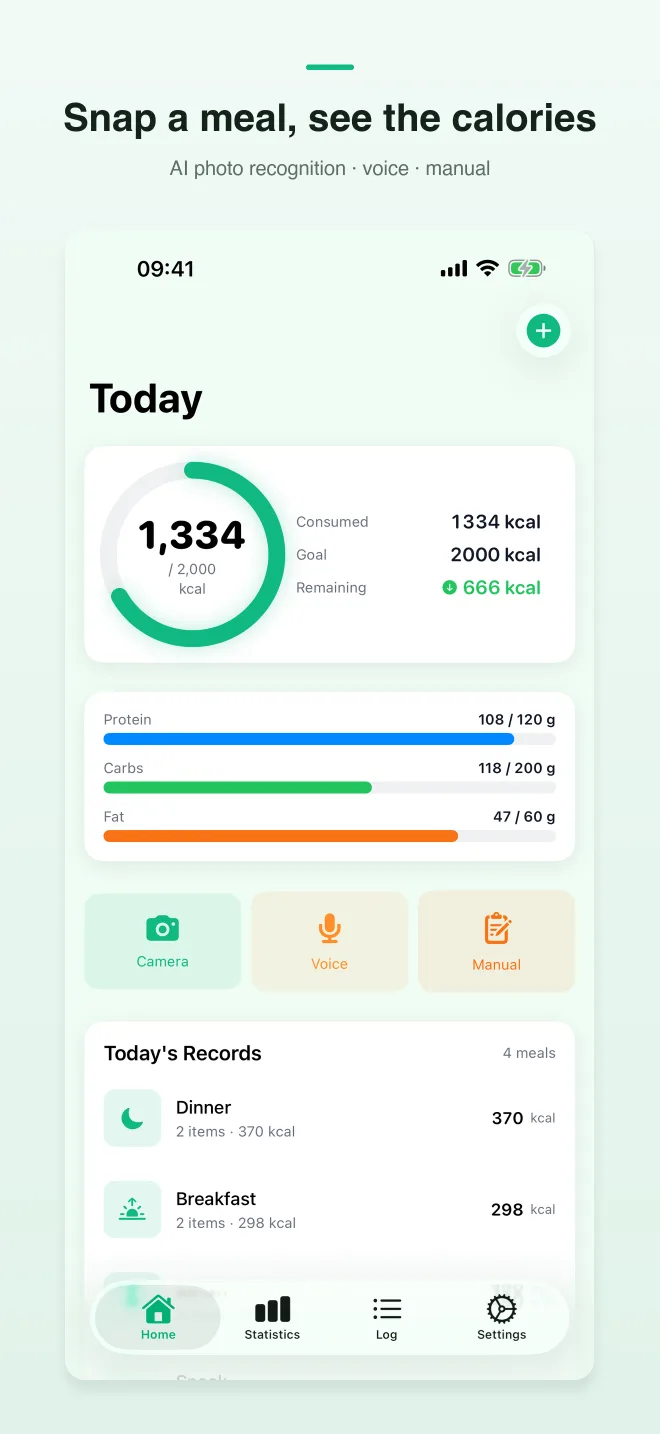
In CalShutter, check the proposed foods and portions, edit missing ingredients, and save only after review.
No measured logging-time or weight-loss result is claimed here.
Frequently asked questions
How accurate is a photo estimate?
TaoApex has not published a controlled CalShutter accuracy benchmark.
Review foods and portions before saving; no universal error percentage is guaranteed.
Should I copy a calorie or macro target from this guide?
No. Individual targets depend on health and circumstances. Seek qualified guidance if you need a weight-management or therapeutic diet plan.
What can CalShutter do?
On iPhone, CalShutter creates editable nutrition estimates from food photos or voice input and also supports manual logging.
It is not a medical device.
Start with one meal
You don't need a perfect plan to begin — you need data.
Log your next meal and let the first data point be today's.
- Get CalShutter on the App Store (iPhone, iOS 17+)
- More on the CalShutter product page
*CalShutter provides estimates and general nutrition information.
It is not a medical device and does not diagnose, treat, cure, or prevent disease.
Consult a qualified professional before changing your diet.*
Actual app screens: review before saving
References
[1] https://www.niddk.nih.gov/health-information/weight-management/body-weight-planner
[2] https://www.niddk.nih.gov/health-information/weight-management/just-enough-food-portions
This article is for general information about calorie tracking and weight management and does not constitute legal, financial, or medical advice. For decisions with real consequences, consult a qualified professional.
Explore More in This Series
Dive deeper with related articles on this topic
How to Track Calories for Free: Manual Logs, Labels, and Daily Limits
You can track calories for free using U.S.
Nutrition Facts labels, covered chain menu postings, and USDA FoodData Central without paying for a subscription.
Here is how to combine manual logging with a limited daily AI allowance and where food-log numbers lose precision.
Read moreHow to Calculate Calorie Deficit for Weight Loss
A calorie deficit means eating fewer calories than you use.
Estimate maintenance, subtract 500 to 750 calories, and keep daily intake at or above 1000 calories.
Read moreIs AI Calorie Counting Accurate? Check and Correct Photo Estimates
Check AI food-photo estimates against labels, recipes and known quantities. Illustrative correction arithmetic, no untested accuracy scores or weekly-trend guarantee.
Read moreMacros Explained: Protein, Carbs, Fat and Food-Log Limits
Learn what protein, carbohydrates and fat do, how to read macro estimates, and how to review food portions in an editable CalShutter meal log.
Read more